
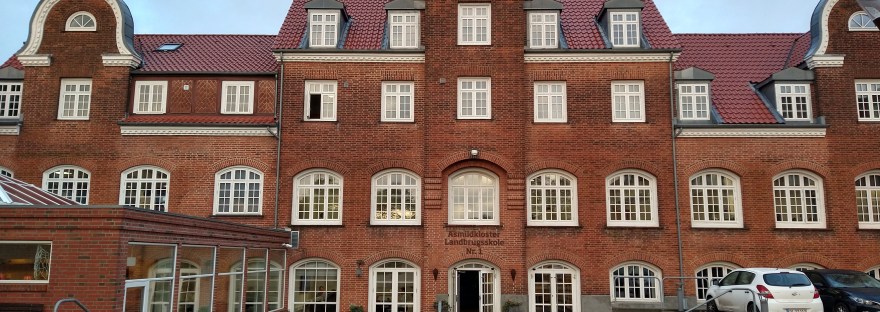
Viborg (Denmark), 25 – 28 October 2022
Future farmers will work in a growing globalised market. To thrive, they shall be able to constantly adapt, communicate, and collaborate at all levels.
From Tuesday 25th and Friday 28th of October 2022, the project partners met in Viborg (Danmark) for the second Learning, Training, and Teaching Activities, organised by Asmildkloster Agricultural College.
On the first morning, the partners were greeted by the school’s Pedagogical manager, Karen G. S. Kjær, and the educational counsellor, Rebecca Bruun. They were introduced to the Asmildkloster Agricultural College and its teaching facilities. Then, the study advisor, Elin Maagaard, did a presentation about the Danish school system and agricultural program and curricula to give the participants an insight into the Danish educational system.
In the afternoon, the partners followed up on tasks on competencies, moderated by Rebecca Bruun. Each partner presented which competencies they counted as important for the students to achieve in the future. For most parts, communication, collaboration, and critical thinking are considered critical for students to achieve. Also, skills such as innovative thinking and entrepreneurial skills are considered necessary in the future due to the speed of the changes in the agricultural business.
Before going on the guided tour of Viborg, Virginie Mechaussie, professor at the Vocational Agricultural School of Perigord (France), shared her learning from the Benesov meeting she attended at the EUROPEA INTERNATIONAL event, which had future skills on the agenda.
On Wednesday 26th, the project activity started with Esther Estruch, from the Agricultural Education and Training Service (Spain), presenting a Spanish Erasmus+ project, “Valor”, in which they are partners. Valor is also focusing on agricultural education and the future skills needed in the business and many synergies were highlighted in the following discussion.
The working session continued in the afternoon at the Agro Business Park, at Aarhus University. There, Professor Steen Henrik Møller animated a debate on which educational skill is needed for the future according to both entering higher education and more entrepreneurial farmers.
Then, Professor Steen H. Møller gave a tour around the facilities to show the research into green transition. The tour was an opportunity to discuss which skills the student needs to gain during the VET education to understand the need for a green transition within the agricultural business and study this topic at the university. Once again skills like collaboration, communication, and innovative and critical thinking were mentioned.
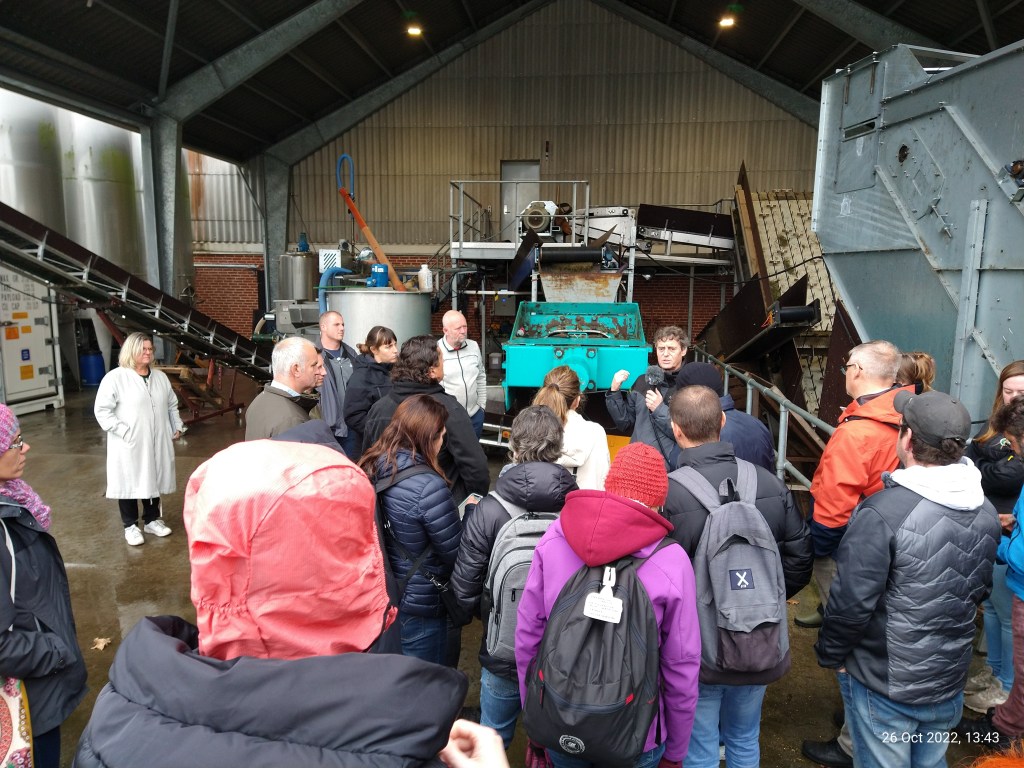
The third day of the LTTA, started with a field visit to Rick van Hess’ farm, to delve deeper into the talk about educational skills needed for future farmers. Rick van Hess, a member of the association for dairy producers in Denmark, strongly emphasised the need for digitalisation in agriculture. He gave an insight into the economic and environmental challenges facing Danish agriculture, which are exacerbated by the legal austerity measures coming from the EU and nationally. Rick van Hess mentioned that for him the most essential skills would be digital skills, innovative and critical thinking as well as skills like collaboration and communication.
On Thursday afternoon, Rikke Therkildsen, from FN17 Business, met with the partners and first-year students from Asmildkloster Agricultural College to talk about which educational skills are needed in the future according to both entrepreneurial sectors and the 17 Sustainable Development Goals (SDGs).
After a short introduction made by Rikke Therkildsen the partnership and the students worked in mixed groups to discuss the future of Agriculture. The students set out their expectations for the skills they needed to acquire through their education. They mentioned that entrepreneurial skills were quite important, as well as economic skills. They also mentioned communication and collaboration as important skills, but more in order to obtain an economical-healthy business.
The last day’s agenda started with a pitch speech from the company AgriFarm. There the partners discussed the educational skills needed in the future according to the agriculture-related industry. They gave an indication of their company and the products they made, meanwhile explaining which competencies are needed to both be employees at the company and to operate the products. Once again, entrepreneurial skills, innovative and critical thinking, creativity, and collaboration were considered important.
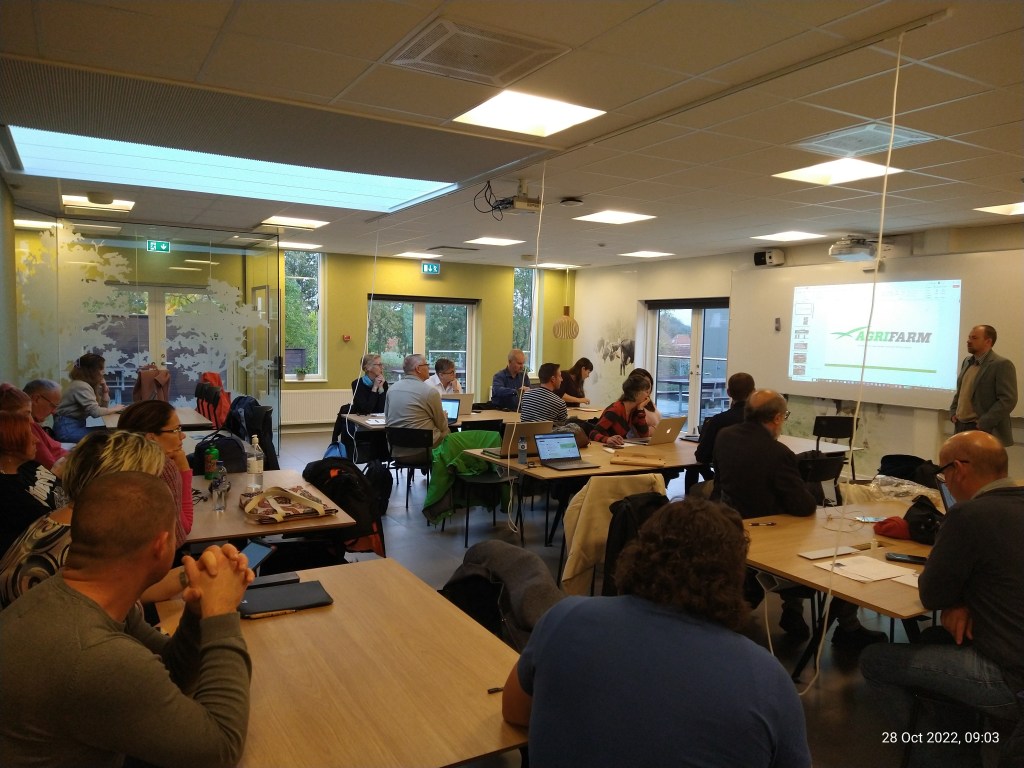
The working programme concluded with a wrap-up discussion of the lessons learned during the four-day event and the planning of the following Transnational Project Meeting in Italy.
The Learning Activity was attended by 27 participants, with backgrounds differing from university and high school professors, educators to organisation representatives from the eight countries involved in the project: Italy, Denmark, Finland, Belgium, France, Spain, Croatia, and Serbia.
 FARMER