

Amposta (Spain), 14 – 17 November 2023
“New entrants to farming with no background are the ones who face more entrance barriers, but at the same time they are the ones who develop more adaptive, transformative, and sustainable projects (new peasantries). We need them to regenerate agriculture and enhance socio-ecological resilience.”
From Tuesday 14th to Friday 17th November 2023, the project partners met in Amposta (Spain) for the fourth Learning, Training, and Teaching Activity (LTTA), hosted by the Agricultural Education and Training Service (SFA) of the Department of Climate Action, Food and Agricultural Agenda (DACC) of the Catalan Government.
The participants worked on defining a new framework for learning content, building on the competencies identified in the past activities, to improve the hands-on, pedagogical approach in agricultural education.
The LTTA started on Tuesday 14th with a welcome meeting at the Espai Ebre KM0, where the participants were welcomed by Lluís Chavarría, Headmaster of Amposta agricultural school, Adam Tomàs, Mayor of Amposta, and Joan Minguet, Head of the Agricultural Education and Training Service (SFA) of the Regional Ministry of Climate Action, Food and Rural Agenda.
Later in the morning, Glòria Cardona and María Marhuenda introduced the Spanish Educational System and the Catalan specificity, focusing on how the schools incorporate and mentor young farmers to agriculture.
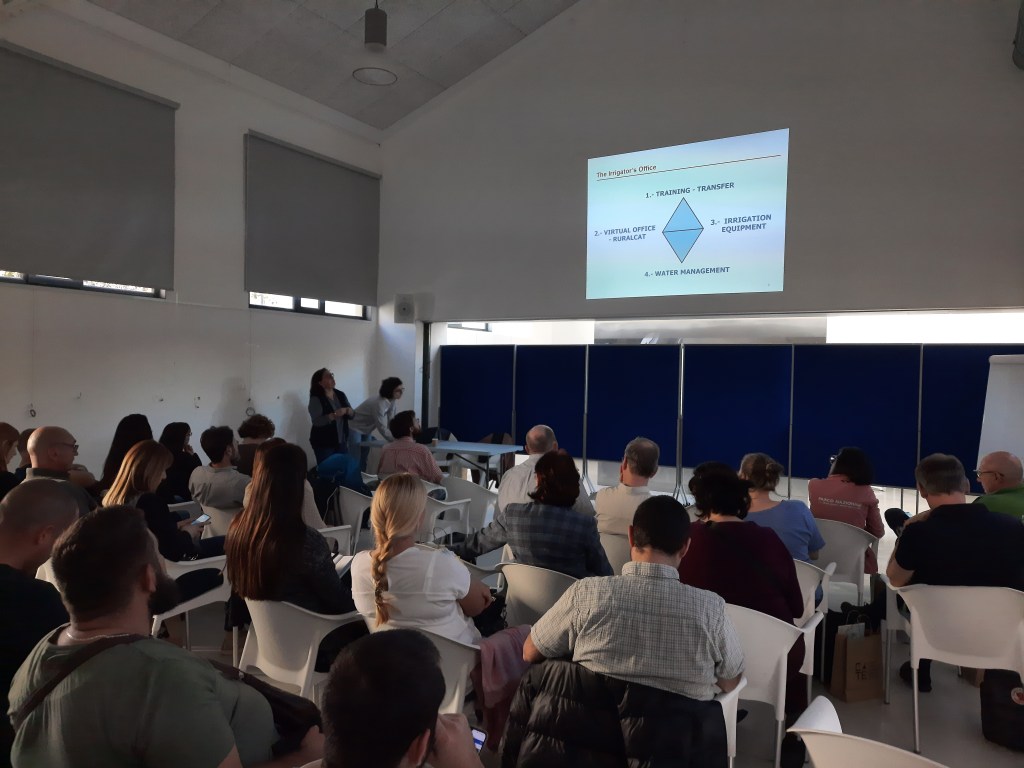
Then, Jaime Coello, engineer and researcher at the Forest Science and Technology Centre of Catalonia (CTFC), presented the LIFE project “Agroforadapt: Agroforestry systems for climate change, adaptation of Mediterranean agricultural and forest areas” and Mercè Soler, coordinator of the irrigator’s office of EA Tàrrega, introduced the local water management system and future challenges.
The morning concluded with a visit to the local agro-VET school’s field, where students presented how they study, train, and engage with the residents using the school organic certified fields and the city hall community orchards.
In the afternoon, Jose Antonio Palacio, engineer agronomist, gave a presentation on the organic certification and focused on how to do and why it is profitable to change from conventional to organic farming practices. The first day ended with a guided tour of the historical centre of Amposta.
On Wednesday 15th, the participants visited the agricultural school of Gandesa and the local Cooperative Winery, where they were introduced to the different types of grapes growing and wine production of the Terra Alta area, and also had the opportunity to taste it.
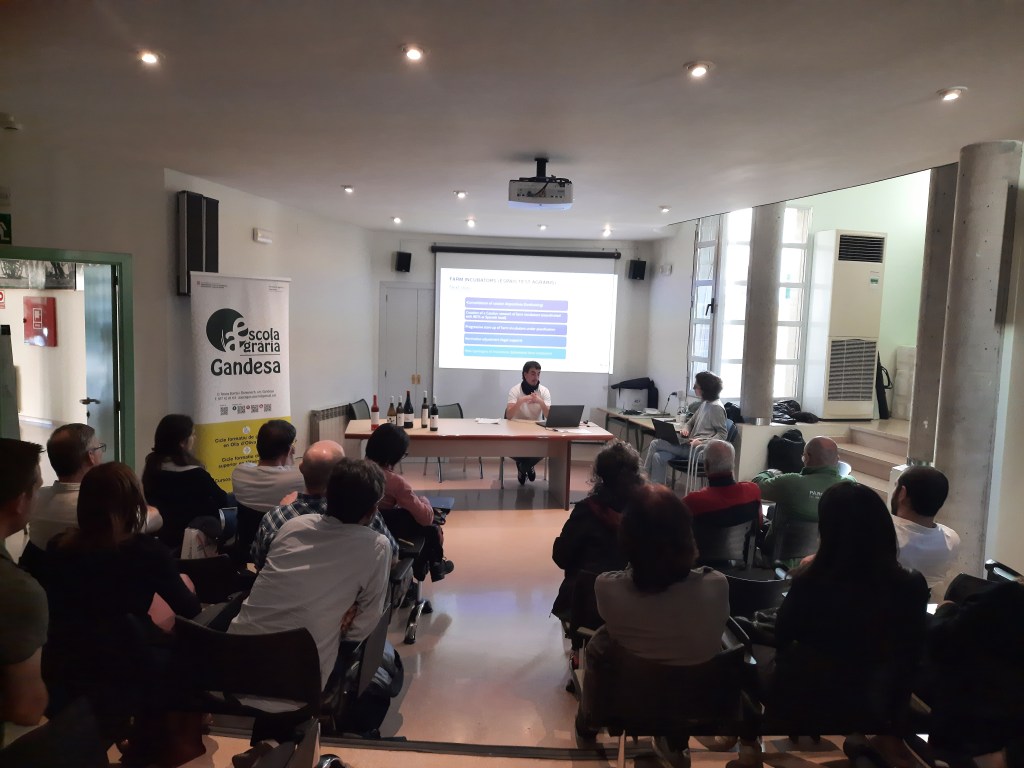
The day continued with the presentation of the online courses of the agro-VET school of Tàrrega, by Pere Dòria, content editor at the Agricultural Education and Training Service (SFA), and Ramon Cuadros, Headmaster of Tàrrega agricultural school, and concluded with an introduction to the Farm incubators’ system in Catalonia, by Marc González from ARCA, the organisation that coordinates the Local Action Groups of Catalonia.
On Thursday 16th, the participants visited the MonNatura centre and learned about the Delta Ebro ecosystem. There they participated in educational activities which provided the opportunity to learn about the cultural, natural, and economical wealth of the area, from salt and rice production to traditional fishing and birdwatching, and the climate-related challenges it faces.
The last day, Friday 17th, each organisation presented their selected best practices and the partners worked on the educational manual to be delivered by the end of the project. With a focus on a more hands-on approach to teaching that matches the skills and competences of future farmers, they analysed the methods already in use and explored new pedagogical approaches.
The Learning Activity was attended by 41 participants, among university and high school professors, educators, and organisation representatives from the eight countries involved in the project: Italy, Denmark, Finland, Belgium, France, Spain, Croatia, and Serbia.

 FARMER