

Novi Sad & Ruma (Serbia), 6 – 9 February 2024
Entrepreneurial farming is an act of freedom. The freedom to organise your time and production choice, in harmony with respecting the ecosystems and the traditions that made it great for centuries.
From Tuesday 6th to Friday 9th February 2024, the project partners met in Novi Sad (Serbia) for the fifth Learning, Training, and Teaching Activity (LTTA), co-hosted by the University of Novi Sad and the Secondary Vocational School “Stevan Petrović-Brile” of Ruma.
The participants worked on recommendations on how the political system can support the recruitment to the vocational educations, building on the new learning content and competencies identified in the past activities.
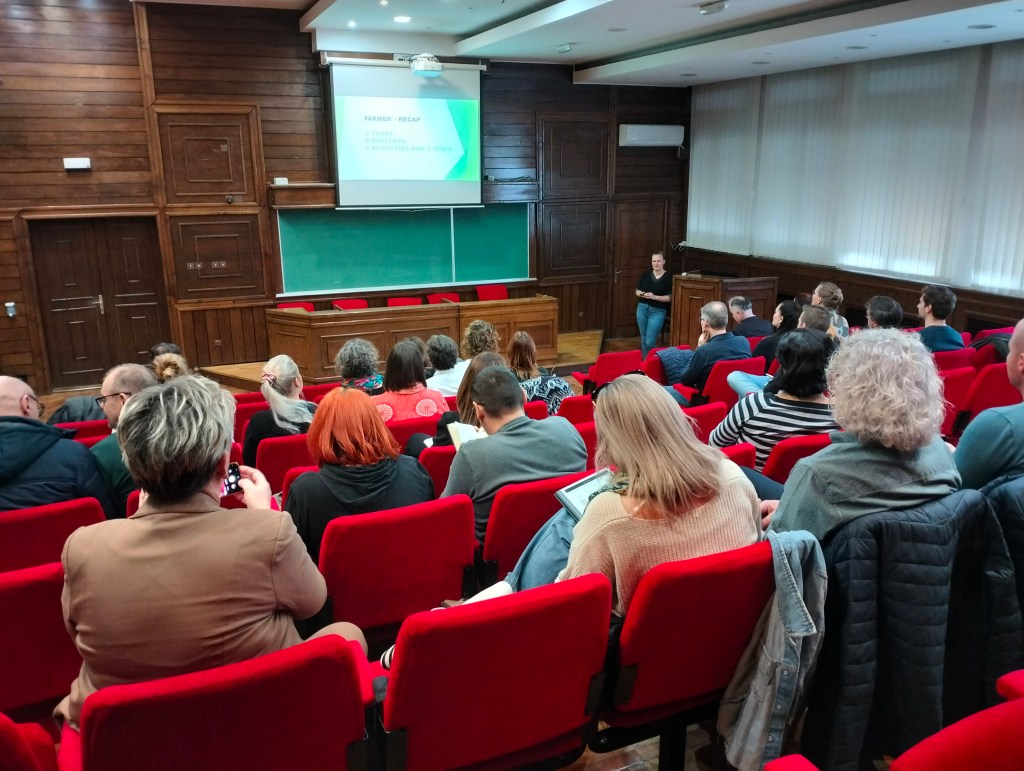
The LTTA started on Tuesday 6th with a welcome meeting at the Faculty of Agriculture of the University of Novi Sad, where the participants were welcomed by the Vicedean for science and international cooperation, Prof. Dr. Branko Cupinaas, and Mr. Radovan Kovacevic, BSc., Head of Dep. for education in the city of Novi Sad.
After the welcome address, Ms. Prof. Dr Jasna Grabic (Faculty of Agriculture, University of Novi Sad) introduced the Serbian Educational System, focusing on how the responsibility of Serbian Ministry for education and the specificities of the Autonomy Province of Vojvodina.
The morning concluded with the speech of Mr. Radisa Mikaric, MSc. Counsellor for “VET” in the Serbian Ministry of Education, on “Agriculture schools in Serbia and how to improve education” to deep in to the importance of improving access to agricultural education, particularly in rural areas, crucial for attracting and retaining talent in the sector.
The afternoon’s works continued with the presentation of the Young Leaders program of “Delta Holding” company, by Ms. Ana Ilic, LWY, HR at “Delta Holding” (Belgrade, Serbia), and of the Center for Career Development and Student Counselling of the Faculty of Agriculture, by Ms. Mladena Mikan, head of this Center.
On Wednesday 7th, the participants visited the Agro Campus in Temerin (Novi Sad). Founded as a centre for artificial insemination of domestic animals, the Agro Campus is now a national research and educational centre for innovative technologies in agriculture managed by the Faculty of Agriculture of the University of Novi Sad. In the past 60 years, all activities have been focused on improving reproduction and genetic basis in cattle breeding through scientific research and professional work, and their application in practice with results that are recognized both in the domestic and international professional public.
The day continued at the premises of the Faculty’s winery in Sremski Karlovci, where the partners had the opportunity to get acquainted with the richest collection of grape varieties (over 600 genotypes), while tasting wines of local varieties.
The second day ended with a guided tour to cultural and historical monuments from the 18th century in Sremski Karlovci.
On Thursday 8th, the LTTA started by visiting the “Grow Rasad”, a leading company in the production of seedlings in the Balkans. Cooperating with all seed companies on the Serbian market, Grow Rasad provide seeds of all hybrids found in the production of vegetables using modern sowing machines that enable the sowing of several different types of seedlings (peat cubes, containers, cubes of stone wool), for which the buyer himself chooses depending on his needs.
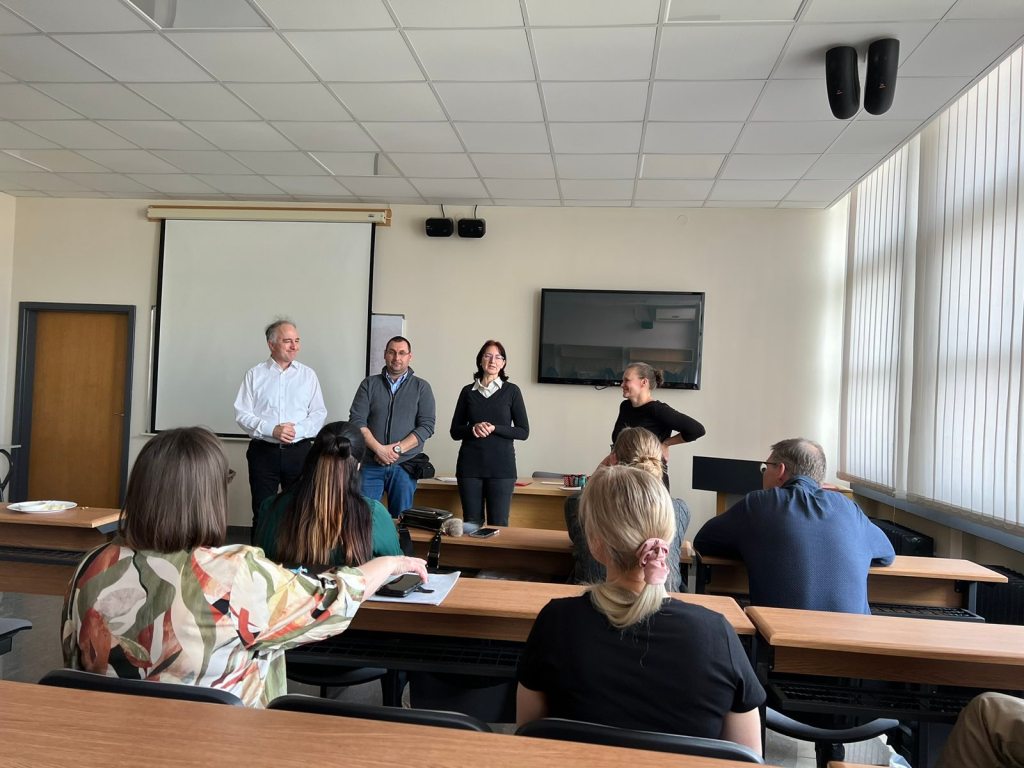
Then, the partners moved to the Secondary Vocational School “Stevan Petrović-Brile” of Ruma, where they visited the school facilities and got interviewed by the local press. Also, project coordinators held an internal progress project meeting to organise the next day’s work plan.
In the afternoon, all participants visit the Special Nature Reserve ”Zasavica” near Sremska Mitrovica. Zasavica is protected as a special nature reserve in order to preserve the natural watercourse and wetlands with a significant diversity of flora and fauna and the present natural rarities and endangered species, including a farm of old breeds of domestic animals, such as the Balkan donkey, the Mangulica pig, Domestic Mountain Horse and Podolian cattle.
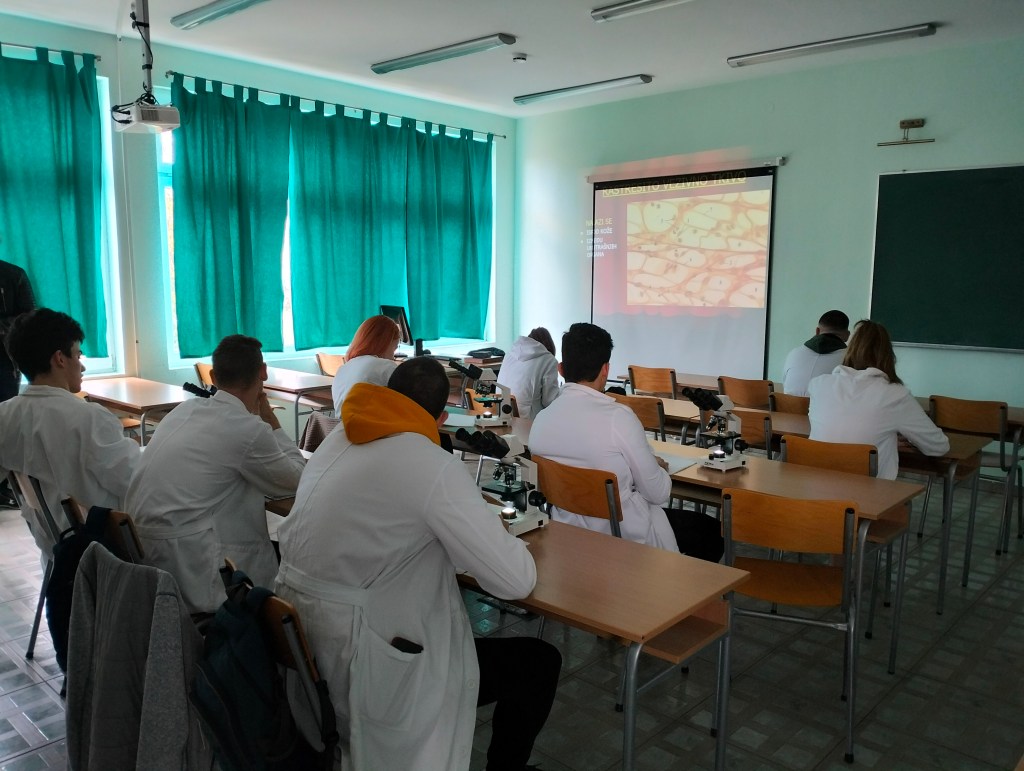
The last day, Friday 9th, each organisation presented their suggestions for the policy recommendations and recruiting practices. Then, they worked in groups to better analyses the proposals and explore each other’s recruitment approaches.
The Learning Activity was attended by 32 participants, among university and high school professors, educators, and organisation representatives from the eight countries involved in the project: Italy, Denmark, Finland, Belgium, France, Spain, Croatia, and Serbia.
 FARMER