
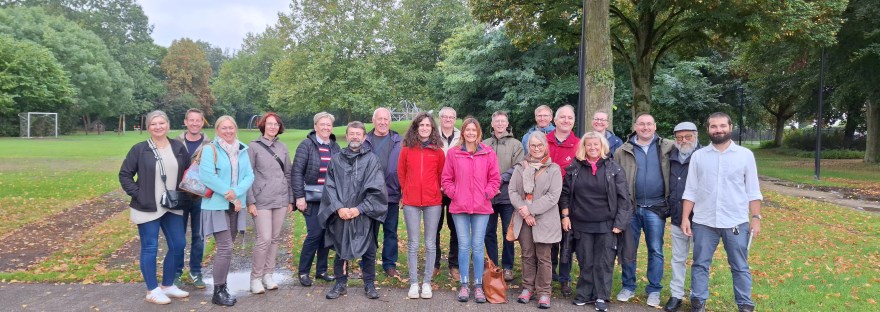
Geel (Belgium), 24 – 25 September 2024
The perfect end of significant journey towards improving agricultural education and its relevance to the future needs of the sector and the wider rural communities.
On Tuesday 24th and Wednesday 25th September 2024, the project partners met in Geel (Belgim) for the final Transnational Project Meeting hosted by the KOGEKA technical school.
On top of the project monitoring meetings, the agenda prepared by the shool included a presentation of the local educational system and guided visits to local entrerpises and research institutes.
On the first day, the participants met at the KOGEKA’s Sint Jozef school in Geel, where the school’s department of Agriculture and biotechnology is located. The 102 years old campus has about 560 students that follow courses for biotechnical science, animal care or agriculture.
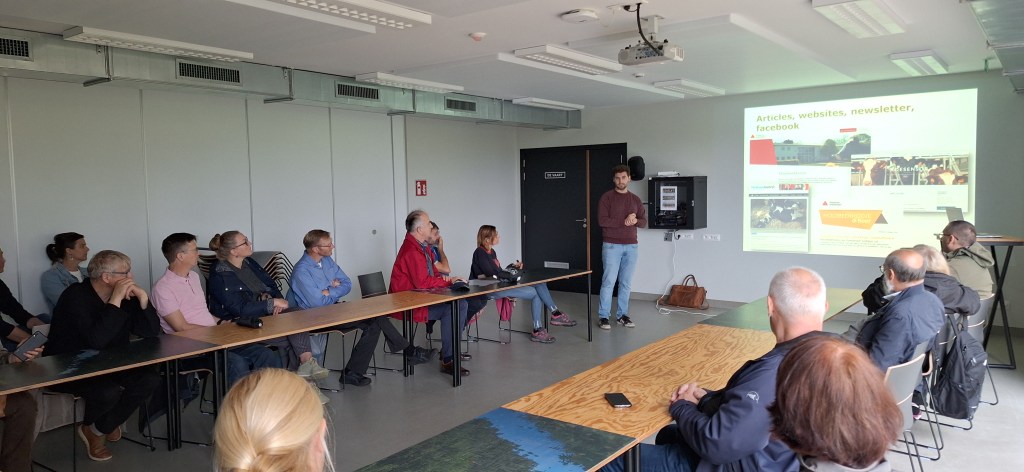
After the professor Joris Arnauts’ presentation of the educational system of Flanders and the specific offer of the Sint Jozef’s campus, the participants went to know the school’s facilities.
In the afternoon, the agenda proceeded with the visit of the Thomas Moore institute, the largest university of applied sciences in Flanders and a pioneer in the ‘learning by doing’ method. There, the participants were visit to the plant for breeding, harvesting and processing insects built with the support of the European Regional Development Fund (ERDF), KU Leuven Campus Geel, and VITO. The plant focusses on the optimisation of insect production and investigates the potential of insects as a sustainable source of biomass for a variety of applications.
The first day ended with a project management meeting and the recording of short interview of each partner’s coordinator for the final dissemination video.
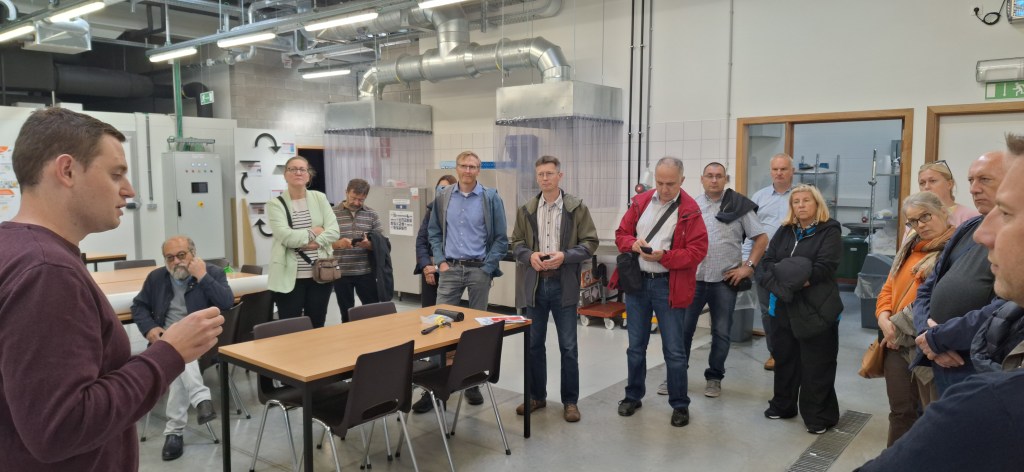
On the morning of Wednesday 25th, the participants visited Hooibeekhoeve, the dairy farm where the students take their practical agricultural trainings. Professor Gijsbrecht Cabanier introduced the attendes to the centre’s activities and on-going projects, including practical researches into dairy cattle and forage crops.
The TPM ended with a coordination meeting to wrap-up the project’s achievements and evaluate next steps to enhance the synergies between universities and the agricultural schools in light of future challenges such as environmental and sustainable issues.
The Transnational Project Meeting was attended by 20 participants, among university and high school professors, educators, and VET providers representatives from the eight countries involved in the project: Italy, Denmark, Finland, Belgium, France, Spain, Croatia, and Serbia.
 FARMER